

Casino laws in India differ from state to state, making it unclear where gambling is allowed. Some states permit casinos, while most ban them, creating a mixed legal landscape.
Knowing the rules for casinos in India helps players and tourists understand what is allowed and what isn’t.
In 2026, the central government enforced a nationwide ban on online casino India legal games with real money under the Promotion and Regulation of Online Gaming Act (PROGA), 2025. Only social and e-sports games remain outside the ban.
This centralized law now overrides many earlier state-level ambiguities, significantly affecting the legal status of online gambling in India and setting the stage for how casinos operate today.
The Basics: Casino Gambling Laws in India
India doesn’t have one national law for all gambling. Instead, the rules depend on both central laws and individual state decisions.
Understanding the foundation helps make sense of what’s allowed and what’s not.
The base of gambling laws in India was the Public Gambling Act of 1867, a colonial law that banned running or visiting physical gambling houses. While it was the backbone for over a century, the new PROGA 2025 now serves as the primary federal framework for the digital era. Unlike the old law, PROGA specifically covers online gaming and modern digital formats, enforcing a nationwide ban on all online real-money games while leaving only social and e-sports games outside the ban.
Under the Indian Constitution, gambling is listed as a state subject, meaning that individual states can create and enforce their own laws on gambling. Some states have retained the 1867 Act, while others have passed modern legislation or built regulated casino industries.
What Are ‘Games of Skill’ and ‘Games of Chance’?
Indian law clearly separates games of skill from games of chance, and this distinction plays a vital role in how gambling activities are regulated. A game of skill depends on the player’s judgment, strategy, or expertise, while a game of chance relies primarily on luck or random outcomes.
The Supreme Court has confirmed this difference in landmark rulings such as State of Bombay v. Chamarbaugwala (1957) and K.R. Lakshmanan v. State of Tamil Nadu (1996). Games like rummy and fantasy sports are often considered skill-based, while casino staples like roulette or slots fall under chance-based games and are heavily regulated. However, under the 2025 Act, even many traditional “skill” games involving real-money wagering are now categorized as “online money games” and are subject to the national ban.
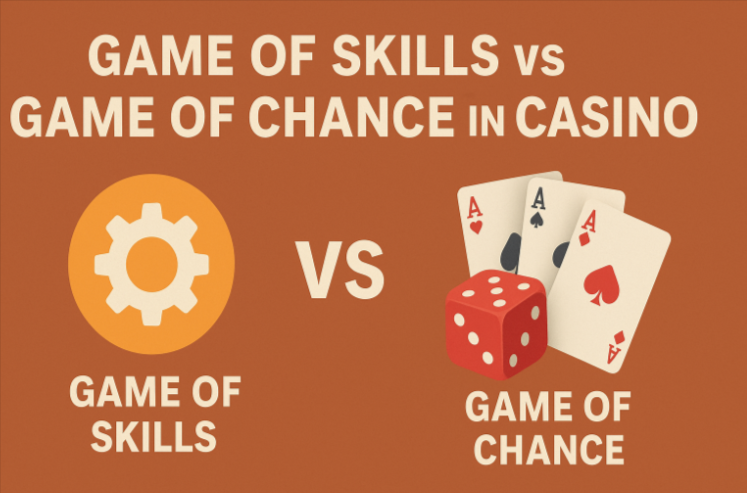
This legal divide affects both offline and online gaming. Skill-based platforms can often operate legally across multiple states, but games of chance are typically limited to licensed casinos in specific jurisdictions.
Where Are Casinos Legal in India?
Casino legality in India is governed by individual states. Only a few states currently allow licensed casino operations, and even within these, the rules vary.
States Where Casinos Are Legal:
While most Indian states ban or restrict gambling, a few have legalized and regulated casinos under local laws.

This section explains where casinos are officially allowed and what the legal setup looks like.
| State | Casino Type Allowed | Legal Basis / Act | Special Notes |
|---|---|---|---|
| Goa | Land & Offshore | Goa, Daman, and Diu Public Gambling Act, 1976 | Offshore casinos on the Mandovi River |
| Sikkim | Land & Online (limited) | Sikkim Casino Games (Control and Tax) Act, 2002 | First to issue online gambling licenses |
| Daman | Land (Active) | Goa Act extended to Daman | Integrated resorts like The Deltin now offer luxury hospitality and gaming. |
Top 5 States Where Gambling Is Banned:
Several Indian states have banned casinos and other forms of gambling outright, including:
- Gujarat
- Maharashtra
- Tamil Nadu
- Telangana
- Uttar Pradesh
These states often enforce strict anti-gambling legislation and impose fines or imprisonment for violations.
A comparative map or table helps highlight where casinos are allowed and where they’re strictly restricted, aiding tourists and investors in understanding the regulatory environment.
Types of Casinos That Operate in India
Casinos in India can be found in different forms on land, floating on rivers, or online. Here’s a quick look at the main types you might come across, and how they’re treated under Indian law.
Land-Based Casinos
These are found mainly in Goa and Sikkim, usually within five-star hotels or specially zoned areas. Entry is regulated with strict ID verification and age limits (usually 21+). Gaming operations are overseen by state-appointed regulatory authorities.

Offshore Casinos (Floating Casinos)
Primarily located in Goa, these casinos operate on anchored ships in the Mandovi River. They’re subject to different rules from land-based establishments and are a significant tourist attraction. Licensing includes navigation, tourism, and gaming permits.

Is Online Gambling Legal in India?
India now has a centralized law on online gambling. For those asking, is online gambling legal in India? The Promotion and Regulation of Online Gaming Act, 2025 (PROGA), makes it clear that all online money games, including online casinos and online gambling platforms, are banned across the country.

Legal Framework
The PROGA 2025 overrides earlier ambiguity under the Information Technology Act, 2000. It prohibits offering or promoting real-money casino games online and directs banks and wallets to block related payments. It also establishes a National Online Gaming Commission to oversee compliance. Only e-sports and social games without monetary stakes remain outside the ban.
Indian vs. International Sites
Earlier, international casino platforms operated offshore and accepted Indian players in a legal grey zone. Under the PROGA 2025, such sites are now strictly illegal for Indian users. In early 2026, the government blocked over 8,400 illegal betting and gambling websites (including mirror domains) to enforce this. Promoting or transacting with them invites severe penalties, including imprisonment of up to 3 years or heavy fines reaching ₹1 crore.
Is Online Crypto Gambling Allowed in India?
Crypto use does not change the position. Since online casinos and money games are banned, crypto gambling is also prohibited. India does not recognize cryptocurrency as legal tender, which makes such operations doubly unlawful.

Tip: As the 2026 law continues to reshape online gaming rules, understanding India’s broader gambling legality helps put these changes into context in Is Gambling Legal in India.
Is Online Casino Legal in India?
Online casino gambling is not legal in India under current central rules. The Promotion and Regulation of Online Gaming Act bans real-money online casino games nationwide, overriding earlier uncertainty around online gambling laws in India and the Gambling Act of India framework.
While debates around is gambling legal in India and betting and gambling in India continue, online casinos remain prohibited. Playing or promoting them may attract penalties under updated Indian gambling laws, even if offshore platforms still target Indian users.
How Do Casinos Operate in Legal Indian States
In states like Goa and Sikkim, casino operators must obtain multiple licenses, including tourism, hospitality, and gaming permits.
There are separate categories for land-based, offshore, and online gaming. Regulatory bodies in these states also have enforcement wings to ensure compliance with operational guidelines, responsible gambling measures, and tax obligations.
Casino Rules for Tourists and Visitors in India
Tourists are allowed to gamble legally in Indian states where casinos are licensed, such as Goa and Sikkim. However, certain rules apply:
- Players must be at least 21 years old to enter most casinos.
- A valid government-issued ID, such as a passport or Aadhaar, is required at entry.
- Most casinos expect formal dress and proper conduct inside the premises.
Travelers are advised to verify if the casino is government-licensed before entering, as unlicensed operations are illegal and subject to penalty.
Penalties for Illegal Gambling (Central & State Examples)
Under the PROGA 2025, operating an illegal gambling house or online platform can lead to fines up to ₹1 Crore and imprisonment of up to 3 years. These penalties act as the central baseline, but states are free to impose stricter rules for physical gambling.
Many states, including Maharashtra, Telangana, and Karnataka, have stronger penalties, higher fines, and wider definitions of what counts as illegal gambling.
Online gambling violations can also attract fines or police action, depending on state laws. Because penalties differ across states, checking the local act is always important.
Recent Legal Developments and Trends
Several Indian states have recently tightened rules around online gambling and casino play. For instance:
Tamil Nadu and Telangana have enforced bans on cash-based online games, with special focus on rummy and poker platforms.
As of 2026, the Promotion and Regulation of Online Gaming Bill remains in force, banning online money games nationwide while recognising e-sports and social gaming.
The rise of casinos in India and the online gambling sector has drawn international attention, prompting stronger gambling laws in India and pressure for a regulated, tax-paying framework.
How India’s Gambling Laws Compare Internationally
India’s gambling framework is a hybrid model with decentralized enforcement. Here’s how it compares:
United Kingdom:
Gambling is centrally regulated by the UK Gambling Commission, covering both physical and online casinos under a single framework.
United States:
Like India, gambling laws vary by state. However, U.S. states that legalize gambling often have clearer online gambling provisions.
Singapore & UAE:
Both countries maintain near-total prohibitions on gambling, with limited exceptions for state-run lotteries.
India’s evolving legal model places it somewhere between permissive and restrictive regimes.
Future of Casino Gambling in India
With increasing internet access, digital payment options, and growing public interest, casino gambling in India is heading toward more formalized regulation.

Key trends include:
- The central government’s interest in creating a national online gambling policy
- Rising public debate on addiction, taxation, and legality
- Expansion of legal casino zones due to tourism and revenue needs
If legal clarity improves, India could become a major regulated iGaming market in Asia.
More Reads:
Conclusion: Online Casino India Legal Nationwide Ban, Goa and Sikkim Regulate Physical Casinos
The legal status of casinos in India is best described as regionally legal, nationally ambiguous, and evolving. Physical casinos operate legally in only a few states, such as Goa and Sikkim, while others maintain outright bans.
Online casino gambling is banned under a new bill, with foreign operators filling the demand. As policy discussions continue, legal professionals and investors should monitor updates from both state and central authorities.
To stay safe and compliant, only engage with licensed operators and remain informed on jurisdiction-specific laws.
FAQs
Goa permits land-based and offshore casinos under strict licensing rules.
International online gambling is not legal in India. The 2025 law bans online money games offered by both domestic and offshore operators, and penalties apply to platforms as well as players who engage with them.
Typically, the minimum age is 21 years. ID verification is required.
Fantasy sports involving real money are subject to strict classification. If they involve money wagering, they are prohibited; only those proven purely as non-monetary e-sports are permitted.
In states like Goa and Sikkim, tourists can enter casinos with a valid ID and meet the age criteria.
No. Under PROGA 2025, it is illegal for any entity (domestic or international) to offer online money games to Indian residents.
