
Fantasy cricket and gambling are not the same under Indian law. Courts classify fantasy cricket as a skill-based activity, while gambling depends on chance.
The Public Gambling Act, 1867, forms the base legal framework, distinguishing games of skill from games of chance.
However, real-money involvement has raised regulatory concerns, and the Promotion and Regulation of Online Gaming Act (PROGA), 2025, has reshaped the operating environment significantly.
This article covers the legal distinction, tax rules, state-wise status, and the current position as of March 2026.
Is Fantasy Cricket Same as Gambling in India
Fantasy cricket is not legally the same as gambling, subject to format and compliance. Indian courts apply the “preponderance of skill” test. Where skill drives the outcome more than chance, the activity falls outside gambling law.
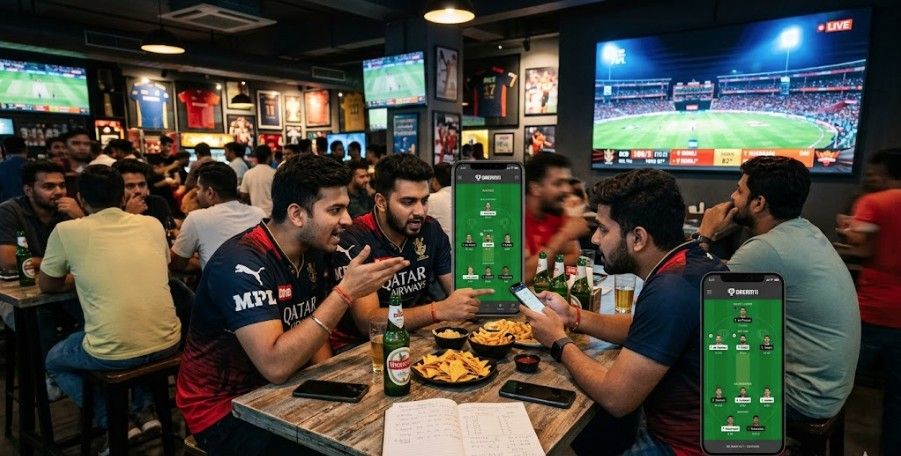
The Supreme Court of India has consistently upheld this position. Nine judges across seven petitions evaluated Dream11’s format and confirmed fantasy sports as a legitimate game of skill protected under Article 19(1)(g) of the Constitution.
Difference Between Fantasy Cricket and Gambling
Fantasy cricket and gambling differ across every core legal and operational parameter. The table below maps those differences directly.
| Factor | Fantasy Cricket | Gambling |
|---|---|---|
| Basis | Skill-based | Chance-based |
| Legal Status | Allowed in most states | Restricted or illegal |
| Control | High, research-based decisions | None, the outcome is random |
| Regulation | Recognised by Indian courts | Prohibited under the law in most states |
The skill vs chance doctrine, applied consistently by Indian courts since the Punjab and Haryana High Court ruling of 2017, remains the primary legal test that separates fantasy sports from gambling.
Does Fantasy Count as Gambling in India
Fantasy cricket does not count as gambling where skill predominates over chance. Indian courts use the “preponderance of skill” test to make this determination.
A format where player selection, statistical analysis, and match knowledge drive outcomes qualifies as a skill game. Classification depends on the specific format and whether the platform complies with Indian law.
Formats that rely on random outcomes or luck-based mechanics can fall into gambling territory and face legal restrictions accordingly.
Is Fantasy a Gambling App in India
Fantasy apps are not classified as gambling apps under the skill-game framework Indian courts established. Platforms like Dream11 use entry fees, prize pools, and research-based team selection.
MeitY’s Online Gaming Rules 2023 require platforms to register through Self-Regulatory Bodies (SRBs). PROGA 2025 received Presidential assent on August 22, 2025, but remains unnotified as of March 2026, leaving the legal position unsettled.
Dream11 suspended paid contests on August 21, 2025. A Supreme Court constitutional challenge is pending.
State-Wise Legality of Fantasy Cricket in India
Fantasy cricket legality varies by state. Several states had restrictions in place even before PROGA 2025 received assent.
| State | Status |
|---|---|
| Most Indian States | Legal under skill-based recognition |
| Telangana | Restricted |
| Andhra Pradesh | Restricted |
| Assam | Unclear, grey area |
Players in restricted states face blocked access to paid fantasy contests regardless of the Supreme Court’s earlier rulings, since gambling regulation remains a state subject under the Indian Constitution. 0
PROGA’s unnotified status means state-level rules remain the primary enforceable framework in most jurisdictions as of March 2026.
Is Fantasy Football Gambling or Not
Fantasy football follows the same legal classification as fantasy cricket in India. It is a skill-based format, not gambling, under the preponderance of skill test applied by Indian courts.

The same state-level restrictions that apply to fantasy cricket apply equally to fantasy football. The format, not the sport, determines the legal position.
Tax on Fantasy Cricket Winnings in India
Fantasy cricket winnings face a flat 30% tax under Section 115BBJ of the Income Tax Act, 1961, from FY 2023-24. Platforms deduct TDS at 30% under Section 194BA before transfer. No loss offsets or deductions under Sections 80C to 80U apply.
A 28% GST on deposits applies since October 1, 2023. If you win ₹50,000 after depositing ₹10,000, your taxable net winning is ₹40,000, with ₹12,000 deducted as TDS. Report this under “Income from Other Sources” in your ITR. (Source: Section 115BBJ – ClearTax)
Conclusion: In India, Fantasy Cricket Is Skill-Based, Not Classified As Gambling
Fantasy cricket and gambling are legally distinct under Indian law. Nine Supreme Court judges confirmed fantasy sports as a skill-based activity across seven petitions. PROGA 2025 received Presidential assent in August 2025.
Its practical impact halted real-money contests, with the Supreme Court yet to rule on its constitutionality. Tax rules under Section 115BBJ apply at 30% on net winnings.
Check your state’s current law and the Supreme Court’s position before participating in any paid fantasy contest in 2026.
FAQs
Fantasy cricket relies on skill, player research, and statistical analysis to determine outcomes. Gambling relies on chance. Indian courts apply the preponderance of skill test to separate the two legally.
Fantasy cricket does not count as gambling where player skill drives the outcome. Classification depends on format, state law, and compliance with Indian gaming regulations currently in effect.
Fantasy apps are not classified as gambling apps under India’s skill-game legal framework. However, PROGA 2025 received Presidential assent in August 2025, halting real-money contests on platforms like Dream11 pending Supreme Court review.
Fantasy football follows the same legal classification as fantasy cricket in India. It is skill-based, not gambling, though all state restrictions and the PROGA 2025 situation apply equally across every fantasy sports format.
