

Casino income is taxable in India. The Income Tax Department taxes all gambling winnings, including casino payouts, lottery prizes, and online gaming income.
The flat tax rate is 30%, plus a 4% health and education cess, bringing the total effective rate to 31.2%. No income slab benefit applies.
This article covers the applicable tax sections, TDS rules, where to file winnings in your ITR, and what penalties follow non-disclosure.
Note: All content here is meant to inform, not advise. For decisions involving tax or money, speak to a certified professional
Income from Gambling Activities is Taxable at What Rate?
All gambling winnings in India are taxed at a flat 30% rate, plus 4% cess, totalling 31.2%. Offline casino winnings fall under Section 115BB, while online gaming winnings fall under Section 115BBJ, both introduced or amended by the Finance Act 2023.

No deduction is allowed under Section 58(4). You cannot subtract any expense or loss from your winnings before calculating tax.
For example, if you win ₹5 lakh at a physical casino in Goa, you owe ₹1,56,000 in tax. This rate applies to physical casino winnings, online gaming platforms, and lottery prizes, with no slab benefit regardless of your total annual income.
TDS on Casino Winnings: Section 194BA and Section 194B Explained
The law separates online and offline gambling for TDS purposes. Knowing which section applies to your winnings determines how and when tax gets deducted at source.
- Online gaming (Section 194BA): The platform deducts TDS before any payout.
- No threshold for online gaming: Section 194BA carries no minimum limit; TDS applies to even ₹1 of net winnings.
- Offline casino gambling (Section 194B): TDS applies when winnings exceed ₹10,000 per transaction.
- TDS rate: 30% in both cases, deducted directly from net winnings.
- Effective from: Section 194BA applies from 1st April 2023, per the Finance Act 2023.
Even after the platform deducts TDS, you must still report the gross winnings in your ITR for the relevant financial year.
Where to Show Gambling Income in ITR Filing?
Report all gambling winnings under “Income from Other Sources” in your ITR. Use ITR-2 if you have no business income, or ITR-3 if you do.
For example, if you won ₹3 lakh at an online casino and the platform deducted ₹90,000 as TDS, report ₹3 lakh as your total income under this head and claim ₹90,000 as a TDS credit.
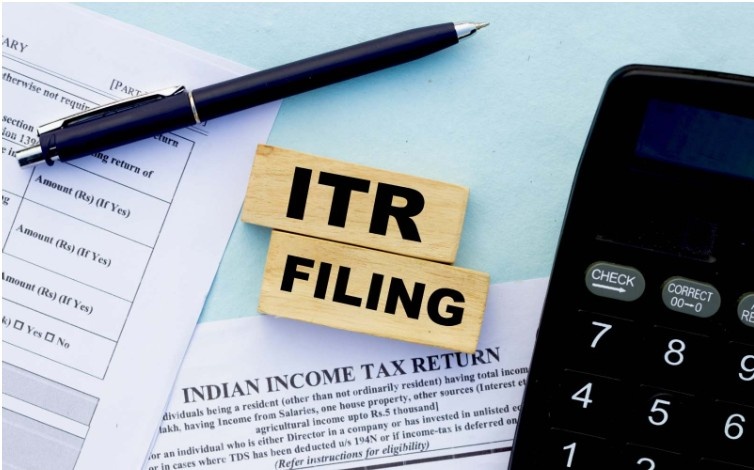
Your TDS details appear automatically in Form 26AS and your AIS (Annual Information Statement). Both documents are accessible through your Income Tax portal login. Source: Income Tax Department ITR Filing Guidelines
Can You Claim Losses or Deduct TDS on Gambling?
You cannot set off gambling losses against any income. However, TDS already deducted by the platform can be claimed as a credit on your return.
Under Section 58 of the Income Tax Act, gambling losses are not eligible for set-off against winnings or any other income head. If you lost ₹2 lakh at a casino but won ₹5 lakh, you still pay tax on the full ₹5 lakh.
However, TDS deducted by the platform reflects in Form 26AS and reduces your final tax payable at the time of filing.
Quick Comparison Table: Global Casino Tax Rules (2026)
Tax treatment of casino winnings varies sharply across countries. The table below shows how India’s rules compare to those of major economies as of 2026.
| Country | Taxable? | Tax Rate | Notes |
|---|---|---|---|
| India | Yes | 31.2% | Flat rate; Section 115BB (offline), 115BBJ (online); TDS under 194B or 194BA |
| USA | Yes | Up to 37% | 24% withheld at source; final rate depends on income bracket and state |
| UK | No | 0% | Players pay nothing; operators pay Gaming Duty or Remote Gaming Duty |
| Canada | Conditional | Varies | Casual players pay nothing; professional gamblers are taxed at 15–33% |
Sources: IRS Topic 419 | IRS Publication 505 | HMRC Gaming Duty | HMRC Remote Gaming Duty | CRA Folio S3-F9-C1
India’s 31.2% flat rate with no exemption threshold is among the most demanding of the four. The UK places the entire tax burden on operators, leaving players fully untaxed.
What Happens If You Don’t Report Casino Winnings?
Hiding casino income is a direct tax offence. The Income Tax Department actively tracks gambling transactions through live data feeds.

The department uses the AIS (Annual Information Statement) to monitor bank credits, platform payouts, and gaming withdrawals in real time. Consequences of non-reporting include:
- Tax notices and scrutiny assessments under Section 143(3).
- Penalty of 100% to 300% of the tax evaded under Section 271(1)(c) for cases up to AY 2016-17, and 50% to 200% under Section 270A for AY 2017-18 onwards (50% for under-reporting; 200% for misreporting).
- Interest charges under Sections 234A, 234B, and 234C.
- Prosecution in cases of deliberate concealment.
For example, a ₹10 lakh unreported casino win can attract a penalty of up to ₹20 lakh under misreporting provisions, plus interest. Source: Section 270A, Income Tax Act
Suggested Reads:
Conclusion: Casino Income is Taxable in India
Casino income in India is fully taxable at 31.2%, with no deductions, no slab benefits, and no loss set-off permitted. Offline casino winnings fall under Section 115BB, while online gaming income falls under Section 115BBJ.
TDS applies at source under Section 194B or 194BA, depending on whether the casino is physical or online. Report all winnings under “Income from Other Sources” in ITR-2 or ITR-3.
Non-disclosure attracts penalties between 50% and 300% of the tax evaded. Consult a certified tax professional before filing.
FAQs
All casino winnings face a 31.2% flat tax under Section 115BB (offline) or Section 115BBJ (online), comprising 30% income tax plus 4% cess, with no slab benefit or deduction allowed.
Under the old tax regime, individuals with income above ₹5 crore pay approximately 42.7% (30% tax plus 37% surcharge plus 4% cess). Under the new default regime, the surcharge caps at 25%, bringing the rate down to around 39%.
TDS deducted under Section 194B or Section 194BA reflects in Form 26AS and can be claimed as a tax credit when you file your income tax return for that financial year.
At the March 2026 exchange rate of approximately ₹86 per dollar, $10,000 equals roughly ₹8.6 lakh. At a 31.2% flat tax, you owe approximately ₹2.68 lakh, with zero deductions or expenses permitted under Indian tax law.
Declare it under “Income from Other Sources” using ITR-2 (for salaried individuals without business income) or ITR-3 (for those with business or professional income). Claim TDS credit using details from Form 26AS.
